After marking thousands of essays across GCSE, A-Level, IB, and university courses, experienced teachers repeatedly see the same mistakes. The good news is that once you know what they are, they are entirely fixable.
1. Describing Instead of Analysing
This is the most common — and most costly — mistake in essay writing. Students often spend paragraphs summarising what happened or what a source says, without explaining why it matters to the argument.
Example of description: "In 1914, Archduke Franz Ferdinand was assassinated in Sarajevo."
Example of analysis: "The assassination of Franz Ferdinand acted as a trigger for a conflict that pre-existing alliances made almost inevitable — a crisis that might otherwise have been contained became a continent-wide war within six weeks."
How to fix it: After every piece of evidence you cite, ask yourself: "So what? Why does this matter to my argument?" If you cannot answer that question, you are describing, not analysing.
2. A Weak or Missing Thesis
Many essays begin with a vague introduction that restates the question without committing to a position. Markers read thousands of essays — a clear, specific thesis immediately stands out.
Vague introduction: "This essay will discuss the causes of World War One and examine different factors."
Strong thesis: "Whilst the emergence of Germany's formidable industrial base created tensions with the established European powers, it was the miscalculations of key decision-makers in the summer of 1914 that led to war."
How to fix it: Write your thesis last, after you have planned the essay. Once you know what your evidence shows, you can commit to a specific argument.
3. Using Evidence Without Explaining It
Quotations and references are only useful if you explain their significance. Students often treat evidence as self-explanatory — dropping in a quote and moving on without analysis.
Weak use of evidence: "Shakespeare writes, 'To be, or not to be, that is the question.' This shows Hamlet is thinking about life and death."
Strong use of evidence: "The famous opening of Hamlet's soliloquy, 'To be, or not to be, that is the question', frames the entire play's central tension: Hamlet is not merely contemplating suicide, but questioning the moral legitimacy of enduring suffering versus acting against it."
How to fix it: Always follow a quotation or reference with your own analysis. What does it reveal? Why is it significant? How does it support your argument?
4. Ignoring the Marking Criteria
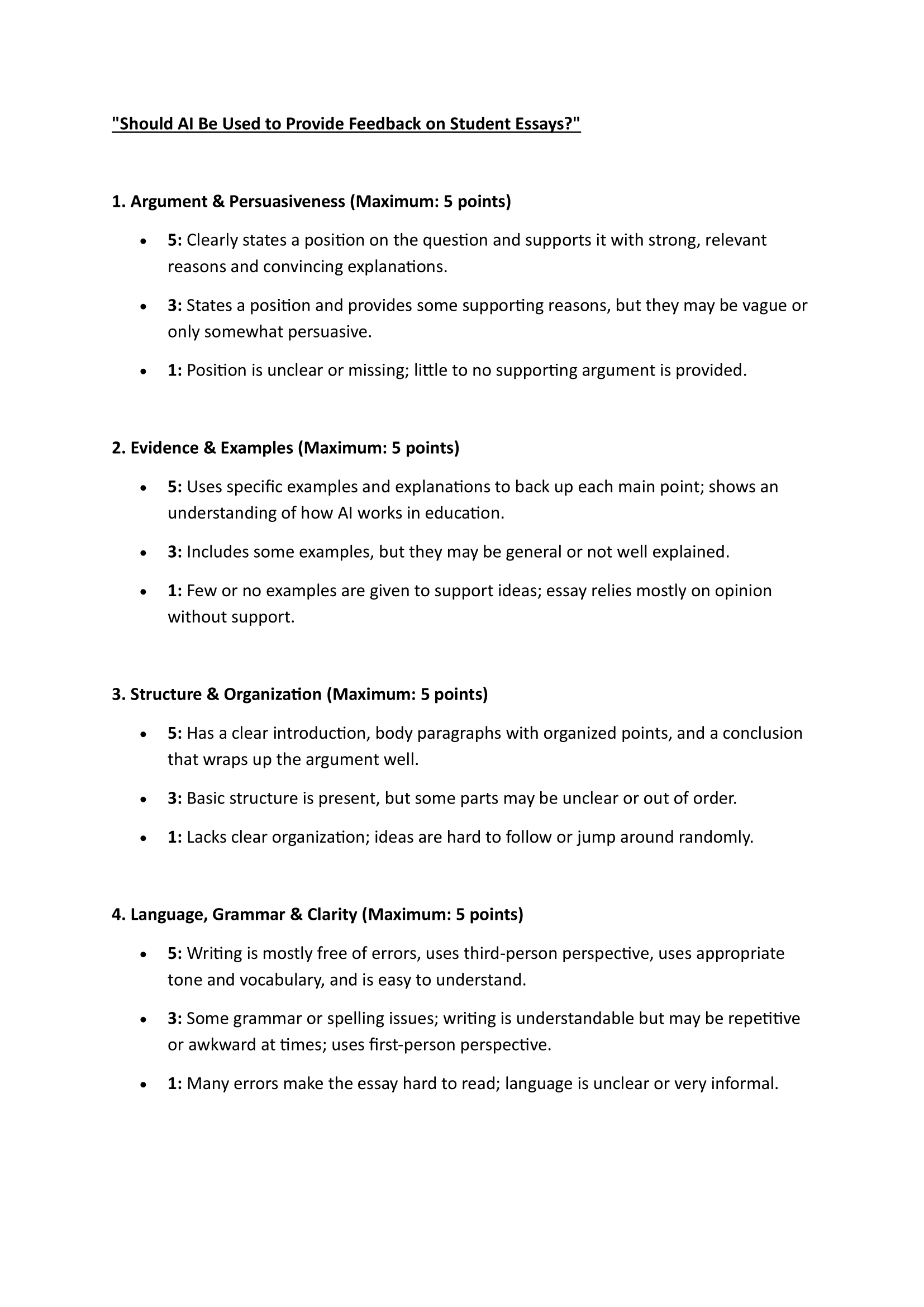
Every essay assessment has a rubric or marking criteria. Yet many students write essays without ever looking at it. Markers are specifically instructed to award marks based on those criteria — which means an essay that does not address them directly will always underperform.
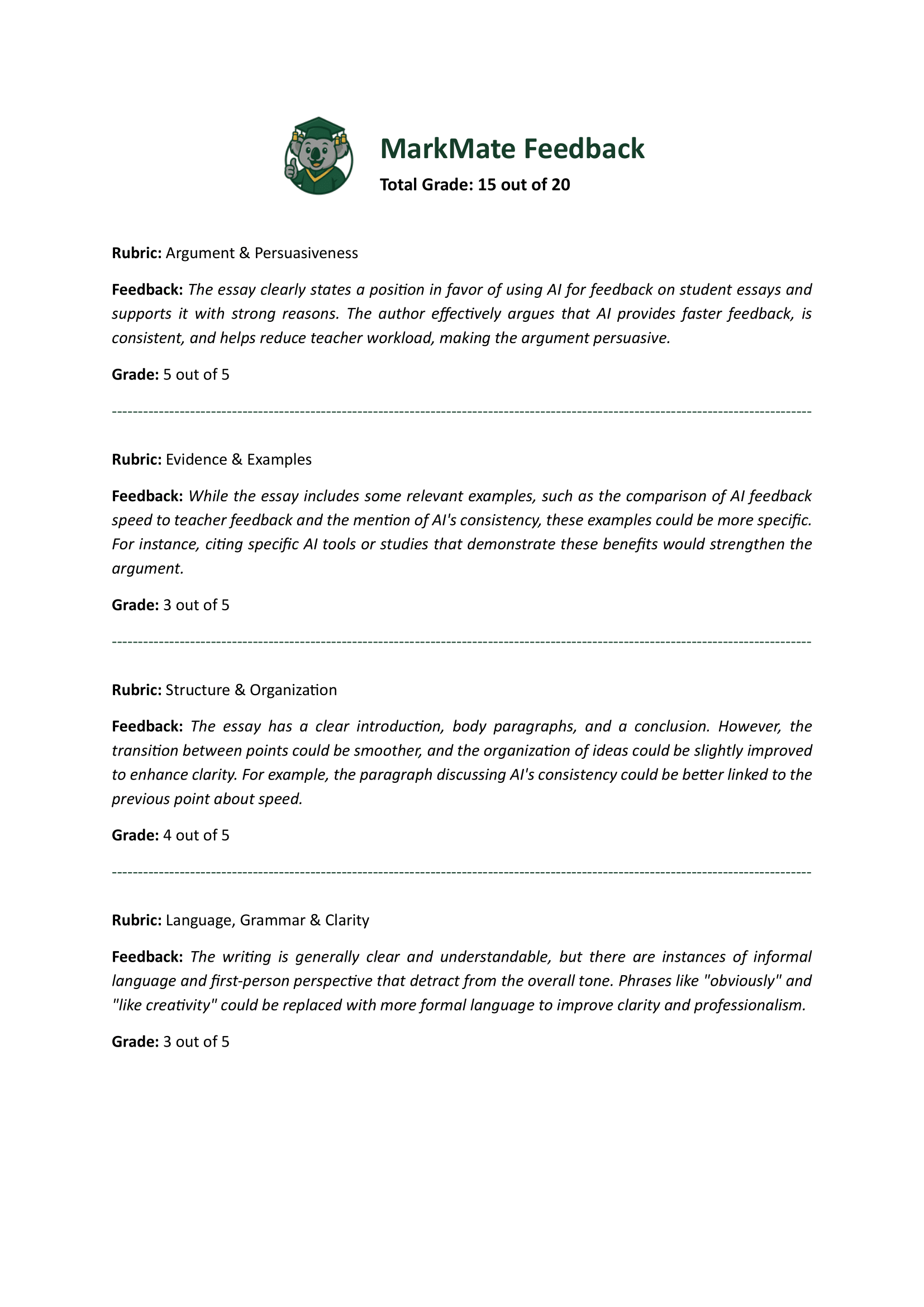
How to fix it: Before you write a word, read the marking criteria carefully. Identify the key things being assessed: — argument, evidence, analysis, style, and structure your essay to demonstrate each one. MarkMate lets you upload your actual rubric alongside your essay, so feedback is tied directly to your specific criteria.
5. Poor Structure and Signposting
A well-argued point can be lost if the essay is hard to follow. Markers should never have to work to understand how your paragraphs connect. Weak essays often jump between ideas without signposting, making them feel disjointed.
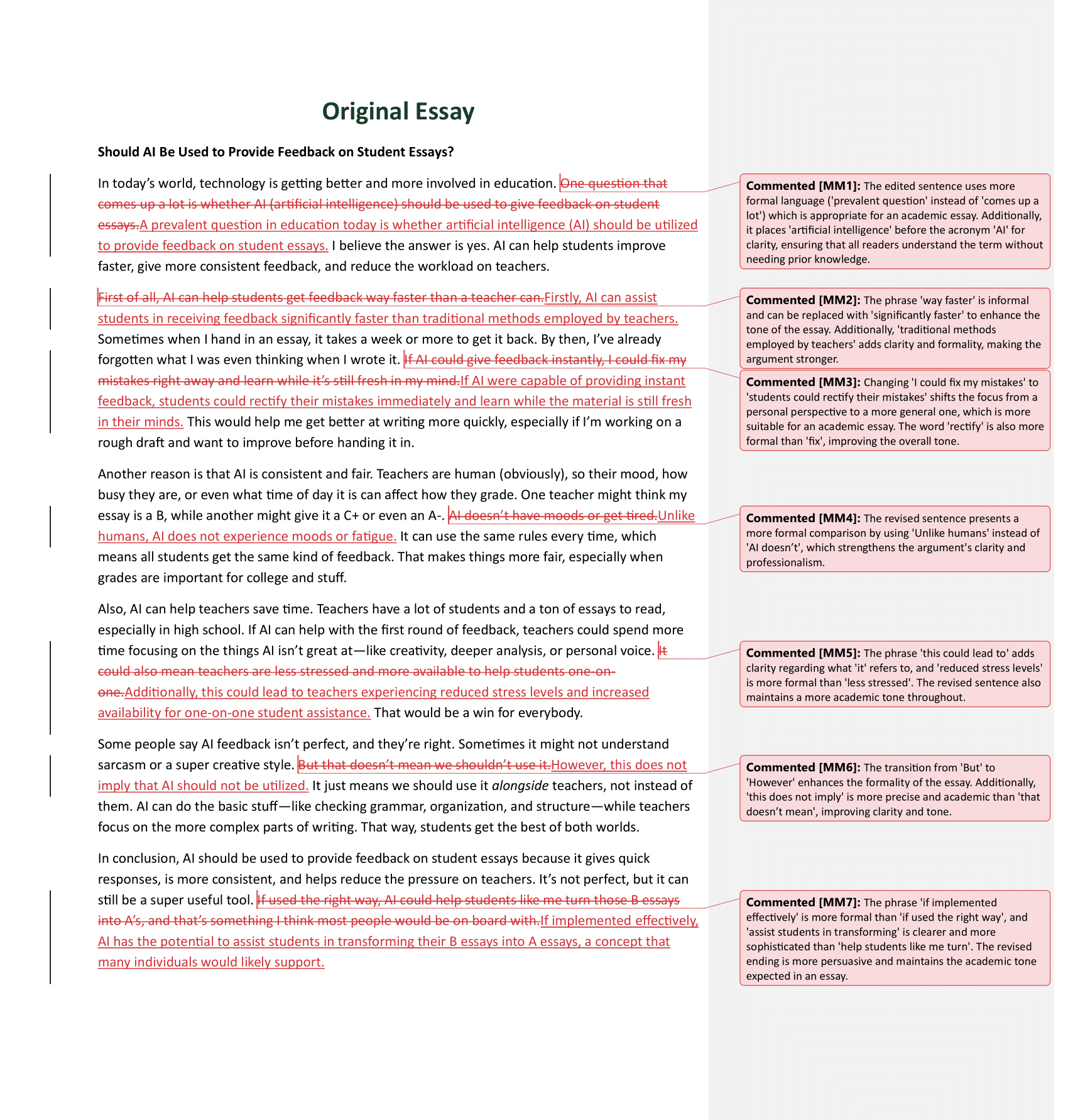
How to fix it: Use clear topic sentences that state what each paragraph will argue. Use signposting language: "Furthermore," "By contrast," "This demonstrates that", to show the logical connections between ideas. Every paragraph should visibly link back to your thesis.
Knowing these mistakes is the first step. Fixing them in your own writing requires honest, specific feedback. The kind a busy teacher cannot always give before submission. MarkMate provides exactly that feedback, graded against your actual marking criteria, so you can correct these issues before the mark that matters.
Get feedback on your essay today — no credit card required.