A strong essay argument is the difference between a response that merely summarises information and one that genuinely persuades a reader. Whether you are writing an A-Level history essay, an IB extended essay, or a university undergraduate paper, the same principles apply.
Start with a Clear, Specific Thesis
Your thesis is the single most important sentence in your essay. It should:
- Answer the question directly
- Take a specific, defensible position (not just a fact)
- Signal the structure of what follows
Weak thesis: "There were many causes of World War One."
Strong thesis: "While nationalism created the conditions for conflict, it was the failure of diplomacy in the summer of 1914 that made a European war inevitable."
The second example commits to a position. It tells the reader exactly what you are going to argue — and what you are choosing to prioritise.
Build Each Paragraph Around One Idea
Every paragraph in your essay should make one clear point that supports your thesis. A helpful structure is PEEL:
- Point — state your argument for this paragraph
- Evidence — quote or cite specific evidence
- Explain — analyse the evidence (don't just describe it)
- Link — connect the point back to your thesis
The explain step is where most students lose marks. It is not enough to drop in a quotation and move on. You need to unpack why the evidence supports your argument.
Anticipate the Counter-Argument
Strong essays do not ignore opposing views — they address them and explain why your position is stronger. This demonstrates critical thinking and shows the marker that you understand the full complexity of the question.
A simple template:
"While some scholars argue that X, this view overlooks Y, which suggests that Z."
You do not need to spend a lot of time on counter-arguments, but acknowledging them makes your own argument more credible.
Use Signposting Language
Academic writing uses signposting to guide the reader through your argument. Words and phrases like "Furthermore," "By contrast," "This suggests that," and "Crucially" show the logical connections between your ideas.
Avoid jumping between ideas without explanation. Every transition should make the direction of your argument clear.
Conclude by Reinforcing Your Argument
Your conclusion should not simply repeat your introduction. Instead, it should show how your argument has been developed and proven across the essay. A strong conclusion:
- Restates your thesis in light of the evidence you have presented
- Summarises the most persuasive points (without listing every paragraph)
- Ends with a broader implication or a sense of why the argument matters
Get Feedback Before You Submit
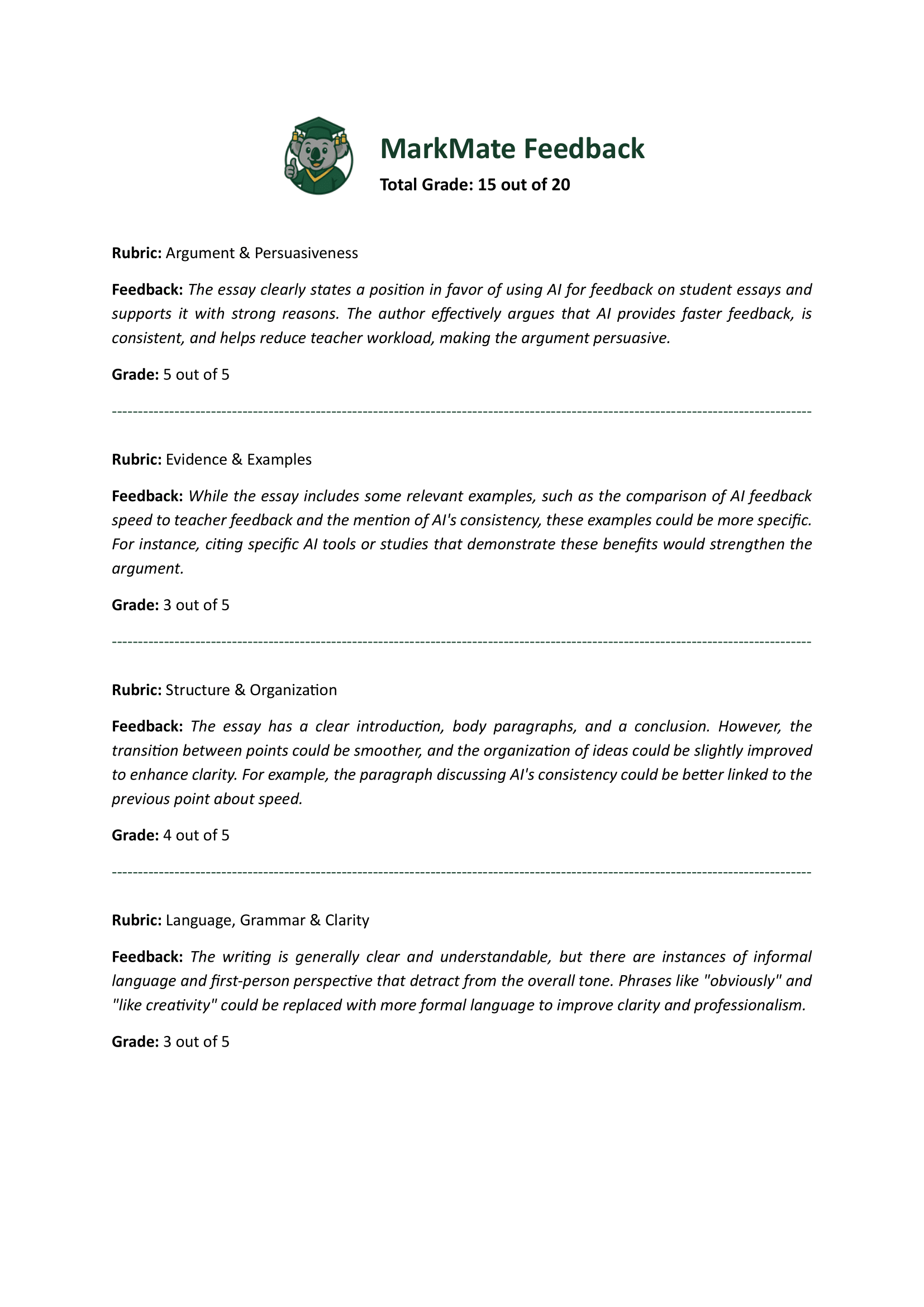
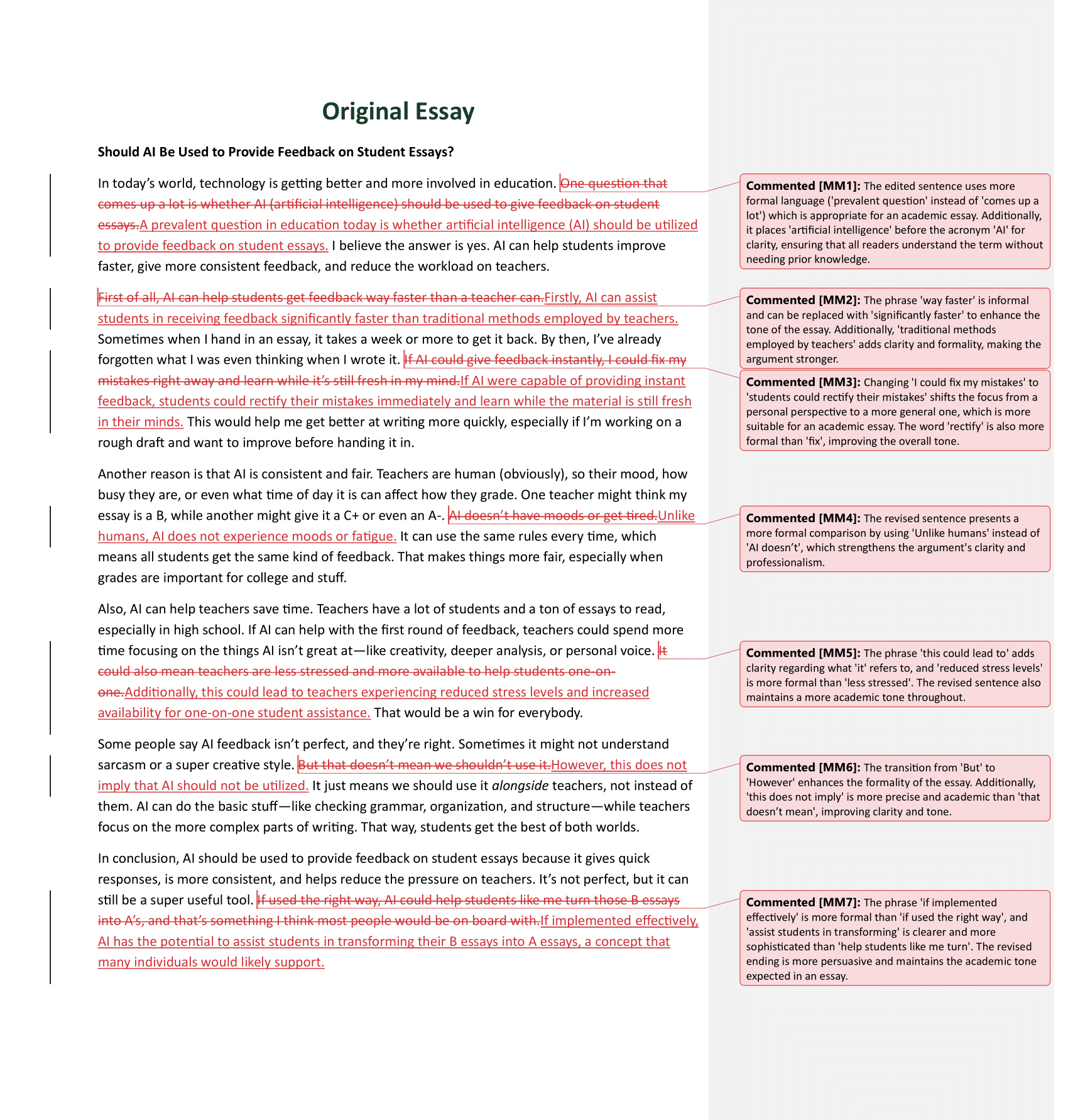
One of the most effective ways to improve your essay arguments is to get honest, specific feedback before submission. MarkMate reads your essay against your marking criteria and tells you exactly where your argument is strong, where it weakens, and how to fix it — the same feedback a top tutor would give, available instantly.
Try MarkMate for free and see what your essay argument is really saying.